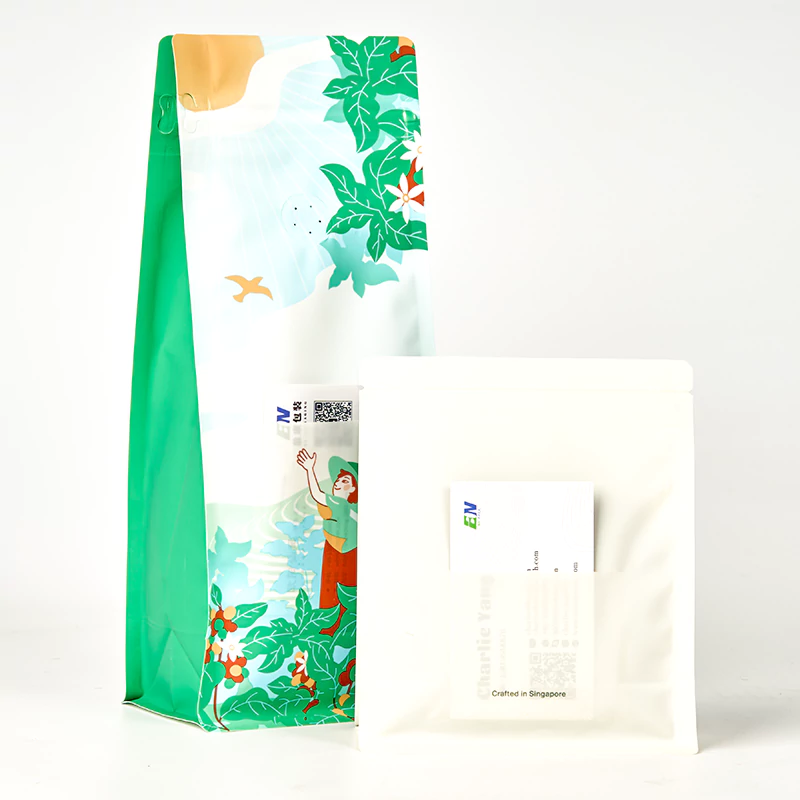
Custom coffee packaging helps preserve roasted beans by controlling oxygen, moisture, light, and carbon dioxide release after roasting. High-barrier materials can reduce oxygen transmission rates to below 1 cc/m²/day, while nitrogen flushing can lower internal oxygen levels to around 1–3%. With one-way valves, UV-resistant layers, and tailored sealing structures, packaging can extend coffee freshness from several weeks to months. Well-designed packaging protects more than the beans; it maintains the aroma compounds, oils, and flavor notes created during roasting.
Roasted coffee begins changing immediately after production because hundreds of volatile compounds formed during roasting continue reacting with the environment. Oxygen exposure accelerates oxidation of coffee oils and aromatic molecules, while moisture affects texture and taste. Research on roasted coffee storage has shown that packaging conditions strongly influence sensory quality, especially after the first 30–60 days.
Coffee brands use specialized packaging structures to slow these changes. Modern custom coffee bags are commonly produced with multilayer films such as PET/PE, PET/metalized PET/PE, or recyclable high-barrier materials. These layers provide different functions, including strength, heat sealing, moisture resistance, and oxygen protection.
The material structure determines how much outside air can enter the package. Oxygen transmission rate (OTR) is one of the measurements used to evaluate packaging performance. Premium coffee packaging often targets an OTR below 1 cc/m²/day, while basic plastic packaging may allow several times more oxygen movement over the same period.
A coffee bag with a strong oxygen barrier can slow aroma loss by reducing contact between roasted beans and external air during storage.
Oxygen control is especially important because coffee contains hundreds of aromatic compounds, including aldehydes, ketones, and sulfur compounds. These molecules create floral, fruity, nutty, and chocolate notes but can degrade when exposed to oxygen. A package that limits oxygen entry helps maintain the original roasting profile for longer periods.
Nitrogen flushing is another method used by many coffee producers. Before sealing, oxygen inside the package is replaced with nitrogen, an inert gas that does not react with coffee components. Many commercial systems reduce internal oxygen concentration to approximately 1–3%, compared with normal atmospheric oxygen levels of about 21%.
The lower oxygen environment works together with barrier films to slow oxidation. This combination is widely used by specialty coffee brands that sell single-origin beans, limited roasts, and premium blends where flavor consistency matters.
Moisture protection is another important part of coffee packaging design. Roasted beans naturally absorb water from the surrounding air because coffee has porous structures created during roasting. When moisture levels increase, coffee can lose its crisp texture and develop unwanted flavors.
Humidity conditions vary greatly between markets. A package used in an environment with 70–80% relative humidity requires stronger moisture resistance than one used in a dry climate. Packaging manufacturers adjust film thickness and material combinations based on transportation routes and storage conditions.
| Packaging feature | Technical purpose | Effect on coffee |
|---|---|---|
| High-barrier film | Limits oxygen and water vapor entry | Slows flavor deterioration |
| One-way valve | Releases carbon dioxide | Prevents package swelling |
| Nitrogen flushing | Reduces oxygen inside the bag | Supports aroma preservation |
| UV-resistant layer | Blocks light exposure | Protects coffee oils |
Freshly roasted coffee also releases carbon dioxide after roasting. This process, called degassing, can continue for days or weeks depending on roast level and bean structure. If the gas cannot escape, pressure may build inside sealed packaging.
One-way degassing valves solve this issue by allowing carbon dioxide to leave while preventing outside oxygen from entering. These valves became widely used in specialty coffee packaging during the growth of premium coffee markets after 2010 because they improved both freshness protection and package stability.
A valve-equipped coffee bag allows freshly roasted beans to be packed soon after roasting without creating internal pressure problems.
Light exposure can also affect coffee quality. Ultraviolet radiation accelerates oxidation reactions, especially in coffee oils. Transparent packaging may display the beans clearly, but long-term exposure under retail lighting can reduce flavor quality.
For this reason, many brands choose opaque films or UV-resistant materials. These packaging choices help protect coffee during transportation, warehouse storage, and retail display. In 2024, many specialty coffee producers continued using dark or metallized packaging formats because they provide stronger light protection than standard clear plastic.
Temperature changes during shipping create another storage challenge. Coffee products may move through different environments, including roasting facilities, warehouses, delivery vehicles, and retail shelves. Repeated temperature changes can increase moisture movement and affect package performance.
Custom packaging allows brands to select materials suitable for their distribution needs. Coffee shipped internationally often requires stronger barrier properties than locally distributed products because storage time may increase from several weeks to several months.
Packaging design also influences customer experience. Coffee buyers often use packaging information to understand roast date, origin, processing method, and brewing recommendations. A well-designed package provides this information while maintaining the technical features needed for freshness.
Brand owners also use packaging design elements such as special printing, resealable zippers, matte finishes, and unique shapes to create product recognition. According to packaging studies published in the food and beverage sector, visual design can influence consumer product selection, especially for premium products where customers compare multiple brands before purchase.
Sustainability has become another consideration in coffee packaging development. Since 2020, many coffee companies have tested recyclable mono-material films, compostable structures, and reduced-plastic designs. However, packaging must still maintain strong oxygen and moisture barriers because removing protective layers may shorten coffee shelf life.
Manufacturers are developing new materials that combine environmental goals with preservation performance. Recyclable polyethylene-based structures and bio-based coatings are being evaluated as alternatives to traditional multilayer packaging systems.
The balance between sustainability and freshness requires careful material selection. A package that uses fewer materials but allows faster oxidation may increase product waste because more coffee loses acceptable quality before consumption.
Coffee packaging also supports quality control throughout the supply chain. Roasters invest significant time in selecting beans, controlling roasting temperature, and developing flavor profiles. Without suitable packaging, some of these characteristics can decline before customers open the bag.
The final packaging stage determines how closely consumers experience the flavor profile created during roasting.
From small specialty roasters to large coffee companies, packaging technology has become an important part of maintaining product quality. By controlling oxygen, moisture, light, and gas release, custom packaging helps preserve coffee freshness while supporting longer storage periods and consistent taste.
The development of coffee packaging continues to focus on combining strong barrier performance, convenient designs, and more sustainable materials. As coffee consumers continue to seek fresher products and distinctive flavors, packaging remains an important factor in delivering roasted beans with their original aroma and taste.